

Apollo 14's Legacy: A Blueprint for Washington D.C.'s Innovation and Infrastructure |
Celebrating disciplined leadership and coordinated systems in the nation's capital |
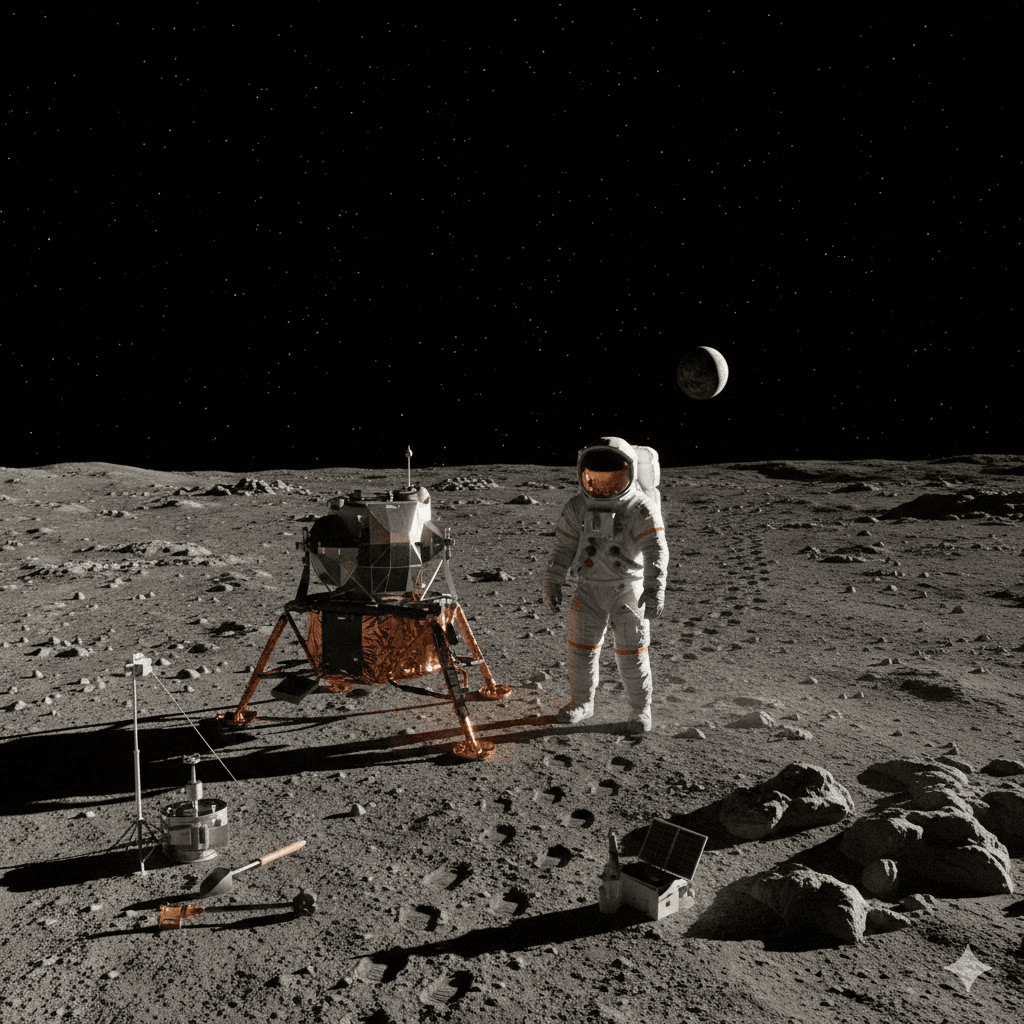
On February 5, 1971, Apollo 14 achieved a successful Moon landing, epitomizing the pinnacle of national innovation and coordination at scale.
This mission was not merely about space exploration; it was a testament to the power of reliable systems and disciplined leadership.
In Washington D.C., a city where science and infrastructure are deeply intertwined, the lessons from Apollo 14 resonate profoundly.
Recent developments in the District underscore this synergy.
The opening of the Children’s National Research & Innovation Campus has established a hub for cutting-edge medical research and technological advancement.
Similarly, the launch of Station DC, a tech incubator in the Union Market neighborhood, aims to foster startups aligned with federal interests in areas like artificial intelligence and chip manufacturing.
These initiatives reflect a commitment to building reliable systems that can perform under pressure, much like the Apollo missions.
The success of Apollo 14 was rooted in meticulous decision-making: thousands of judgments made in advance, procedures refined through testing, and risks identified and minimized.
This methodical approach is the backbone of durable institutions.
Washington D.C.'s recent investments in infrastructure and innovation districts mirror this philosophy.
The city's dedication to creating environments where science and infrastructure can thrive together is evident in projects like the Mobility Innovation District in Southwest D.C., which aims to improve equitable access and create a global hub for mobility innovation.
Apollo 14 also offered a cultural signal: ambition can be responsible.
It demonstrated that a society can aim high without abandoning rigor.
That combination—vision paired with process—is what separates progress from mere performance.
For Washington D.C., February 5 serves as a civic reminder: the future isn't built by bold statements alone.
It's constructed when systems earn trust through consistency, clarity, and repeatable execution.
The Moon landing stands as one of the clearest examples of what happens when coordination becomes culture.
As the District continues to evolve, embracing these principles will be crucial in shaping a resilient and innovative future. |
0 Comments
Join the conversation
Be the first to comment
Share your thoughts above.