

Aspirin's Enduring Legacy Reflects Washington D.C.'s Commitment to Public Health |
The steadfast presence of aspirin mirrors the city's dedication to reliable and equitable healthcare systems. |
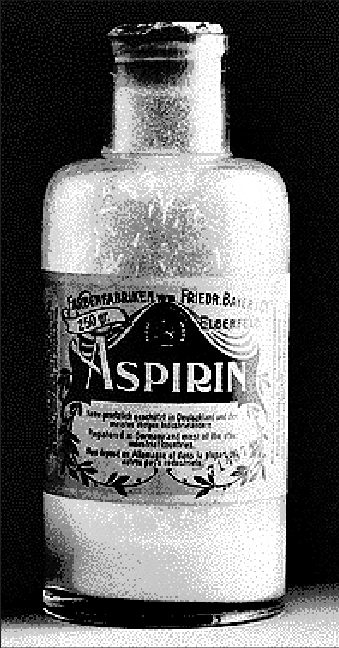
Washington D.C. has long been a city built on enduring systems—laws, institutions, and processes designed to outlast the individuals who establish them.
Similarly, the story of aspirin aligns seamlessly with this ethos.
Its significance lies not in excitement but in its unwavering dependability—a remedy that delivers consistent results, time and again, regardless of circumstance.
Aspirin didn't seek authority; it earned it.
Through repeated use over time, it became embedded in the routines of hospitals, military clinics, and households alike.
In a city that understands how trust accumulates slowly—and how fragile it can be—that matters.
Reliability, not rhetoric, is what sustains institutions.
What’s striking about aspirin is how little it changed in essence, even as the world around it transformed.
Governments rose and fell.
Medical science advanced in leaps.
Yet aspirin remained a baseline—a reference point against which new treatments were measured.
Its restraint became its power.
Washington knows the value of that kind of quiet continuity.
The most effective systems here are often invisible when they’re working well.
They only draw attention when they fail.
Aspirin followed the same path: present, effective, largely unnoticed.
There’s also a democratic quality to its reach.
It crossed ranks and roles without distinction.
In a city often divided by hierarchy, aspirin offered relief without regard to title or affiliation.
That universality is part of why it endured.
Its legacy isn’t innovation for innovation’s sake.
It’s proof that trust, once earned, becomes infrastructure.
Washington D.C.'s public health history reflects this principle.
Institutions like the District of Columbia General Hospital, operational from 1806 until its closure in 2001, served as pillars of community health.
Similarly, St. Elizabeths Hospital, established in 1852, became an international model for psychiatric care.
These institutions, much like aspirin, provided consistent and reliable care, becoming integral to the city's healthcare infrastructure.
Moreover, the city's commitment to public health is evident in initiatives like the DC Healthy Schools Act of 2010, aimed at improving student health through better nutrition and increased physical activity.
Such measures underscore the importance of dependable health systems that serve all residents equitably.
In essence, the enduring legacy of aspirin mirrors Washington D.C.'s dedication to building and maintaining public health systems that prioritize reliability and institutional trust.
Just as aspirin has remained a steadfast remedy through changing times, the city's health institutions continue to uphold the principle that trust, once earned, becomes the foundation of lasting infrastructure. |
0 Comments
Join the conversation
Be the first to comment
Share your thoughts above.