

Samuel Morse's Telegraph Demonstration: A Catalyst for Washington, DC's Governance Evolution |
The 1838 telegraph demonstration by Samuel Morse revolutionized communication, transforming Washington, DC into a hub of rapid decision-making and policy coordination. |
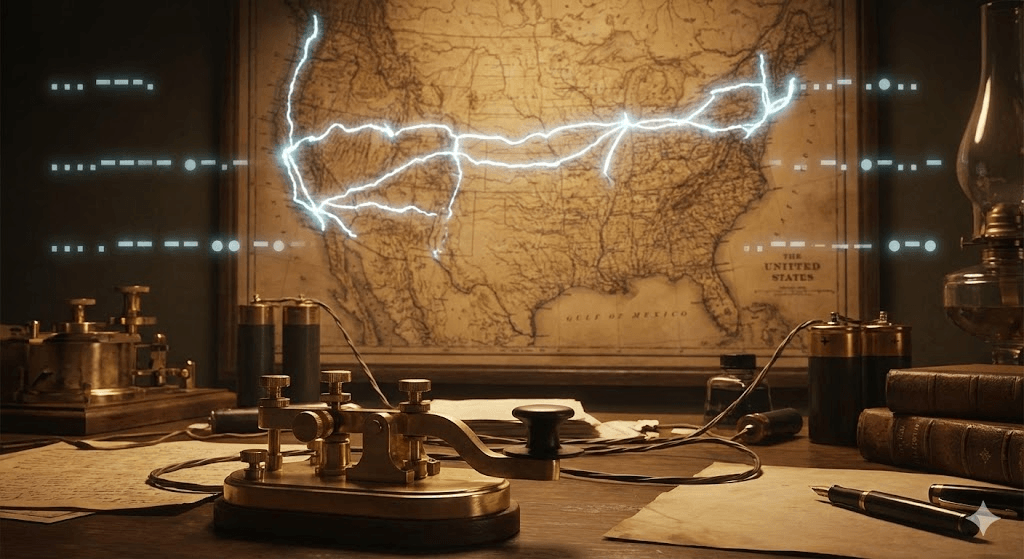
In 1838, Samuel Morse unveiled his groundbreaking telegraph system to the U.S. Congress, marking a pivotal moment in Washington, DC's history.
This demonstration showcased the potential to transmit messages instantaneously over long distances, a stark contrast to the era's reliance on horseback couriers.
The ability to send information faster than events unfolded was revolutionary.
By 1844, the impact of Morse's invention was undeniable.
On May 24, he transmitted the first official telegraph message, "What hath God wrought?" from the Supreme Court Chamber in the Capitol to Baltimore.
This event underscored the telegraph's capacity to reduce uncertainty and synchronize actions across states and institutions.
Washington, DC, quickly reaped the benefits of this technological leap.
Policy decisions, diplomatic communications, and administrative directives could now be coordinated with unprecedented speed and accuracy.
The telegraph's introduction laid the foundation for modern governance systems that prioritize immediacy and efficiency.
Today, the expectation for rapid information flow in governmental operations can be traced back to Morse's signal.
Washington's evolution into a central coordination hub is directly linked to that transformative moment when distance ceased to impede decision-making.
In essence, Morse's telegraph not only revolutionized communication but also redefined the dynamics of governance, positioning Washington, DC, at the forefront of this paradigm shift. |
0 Comments
Join the conversation
Be the first to comment
Share your thoughts above.