

Washington, DC's Transit Evolution: From Electric Streetcars to Modern Mobility |
Tracing the city's journey from 1888's electric streetcars to today's dynamic transportation landscape |
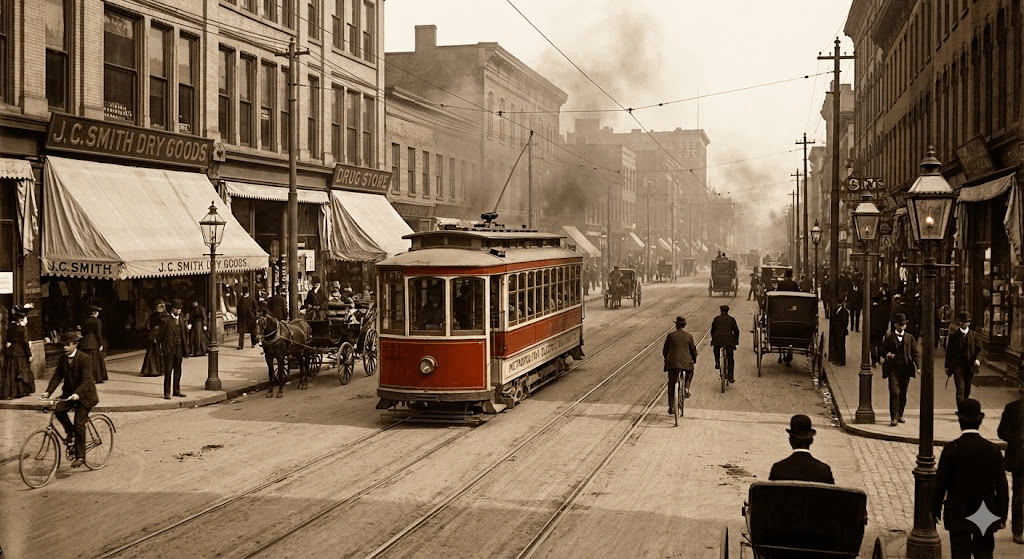
In 1888, the introduction of electric streetcars revolutionized urban mobility, transforming Washington, DC into a more connected and efficient city.
These streetcars provided systematic movement and predictable timing, enabling the city to function as a coordinated whole.
Mobility in Washington, DC has always been more than a convenience—it's an operational necessity.
Government operations, diplomatic activities, and public life depend on efficient movement across the city.
The electric streetcar system facilitated reliable commuting, allowing neighborhoods to expand without losing connection to central institutions.
Public access increased, and the city's footprint became more intentional.
These streetcars also promoted equity by offering affordable transit options, broadening participation in civic and economic life.
Access to jobs, services, and public spaces expanded alongside the tracks.
Washington's urban layout still reflects lessons from that era.
Transportation corridors shape density, development, and daily movement.
The logic introduced in 1888 remains embedded in modern planning decisions.
Recent developments continue to reshape the city's transit landscape.
In 2024, the District Department of Transportation announced the phased elimination of the DC Circulator, with service ending on December 31, 2024.
This decision reflects ongoing efforts to streamline and modernize public transportation.
Simultaneously, the Washington Metropolitan Area Transit Authority (WMATA) is implementing its most significant updates in decades.
Faster train services and the launch of the "Better Bus" network aim to enhance efficiency and meet the needs of a growing ridership—all without increasing fares.
Key changes include longer weekend hours and more frequent trains, with the Silver Line now operating under two service patterns for improved peak-time handling.
These improvements are part of WMATA's broader goal to establish the bus system as the core of Washington, DC's transportation infrastructure by 2030.
Additionally, the Metropolitan Washington Council of Governments and WMATA boards have endorsed a plan to provide $460 million in new annual capital funding for Metro, beginning in Fiscal Year 2028.
This investment aims to modernize the bus and rail system, ensuring safe, reliable access across the National Capital Region.
These developments underscore the city's commitment to designing systems that support access, efficiency, and shared use.
The electric streetcar stands as an early reminder that mobility is foundational to a functioning city.
Washington, DC continues to embrace this responsibility, evolving its transit infrastructure to meet the needs of its residents and visitors. |
0 Comments
Join the conversation
Be the first to comment
Share your thoughts above.